Product Description
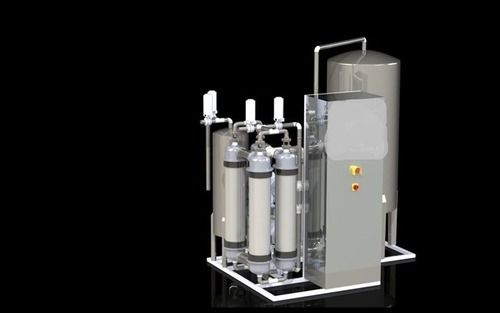
Membrane process represent an important subset of filtration process as there are very few pollutant found in water. The separation is based on the physical characteristics of the pollutant to be removed such as size, diffusivity of affinity for specific contaminants
VEPL in all types of Membrane filter as per client requirement. All material of construction available in this equipment.
Versatile Industrial ApplicationDesigned for water purification, wastewater treatment, and the beverage and pharmaceutical industries, the membrane filtration system efficiently removes contaminants across a wide range of processes. Its high efficiency and robust construction make it an essential solution for industries demanding stringent filtration standards.
Robust Performance in Varied ConditionsWith a 0.01-0.1 micron pore size, our system performs effectively across challenging pH (2-12) and temperature ranges (5C-45C). The high-performance membranes offer resistance against chemicals and temperature variations, ensuring reliability, reduced operational risks, and extended operational life.
User-Friendly Maintenance and LongevityRoutine backwashing and chemical cleaning maintain the system's 99% efficiency. The easy-to-maintain design, coupled with durable PES/PP materials, delivers a membrane lifespan of 2-5 years. This translates to lower maintenance needs, greater uptime, and cost savings over the long term.
FAQ's of Membrane filtration system:
Q: How does the membrane filtration system work in industrial applications?
A: The system utilizes hollow fiber or spiral wound membranes with a pore size of 0.01-0.1 micron, enabling separation of fine particles, microorganisms, and organic material from water or process liquids. Used in cross-flow or dead-end filtration modes, it ensures high purity in water purification, wastewater treatment, and related industries.
Q: What are the cleaning and maintenance processes for this membrane filtration system?
A: Maintenance involves periodic backwashing and chemical cleaning, which prevent fouling and restore performance. The system is designed for straightforward maintenance, helping sustain efficiency levels and extending membrane life up to 2-5 years.
Q: When should I choose this membrane system for my plant or process?
A: This filtration system is ideal when highly efficient removal of particles and microorganisms is required (up to 99% efficiency), particularly in water treatment, beverage production, and pharmaceuticals. It is best used in processes where reliable performance over broad pH and temperature ranges is expected.
Q: Where can this membrane filtration system be installed?
A: The system is suitable for installation in industrial plants, manufacturing facilities, and municipal treatment sites. It can be integrated easily using flange or threaded end connections, supporting capacities from 1000 to 10,000 LPH to suit diverse operational requirements.
Q: What are the benefits of cross-flow compared to dead-end filtration mode?
A: Cross-flow mode continuously sweeps away contaminants, reducing membrane clogging and extending cleaning intervals, making it suitable for high-solid loads. Dead-end mode is typically used for lower solids, allowing simple, batch-style operation with rapid filtration results.
Q: How does membrane material affect performance and chemical resistance?
A: Constructed from Polyethersulfone (PES) or Polypropylene (PP), the membranes provide excellent resistance to harsh chemicals and elevated temperatures. This ensures system stability and performance across a wide pH and temperature range, critical for demanding industrial environments.








 Send Inquiry
 Send Inquiry
 Send SMS