Product Description
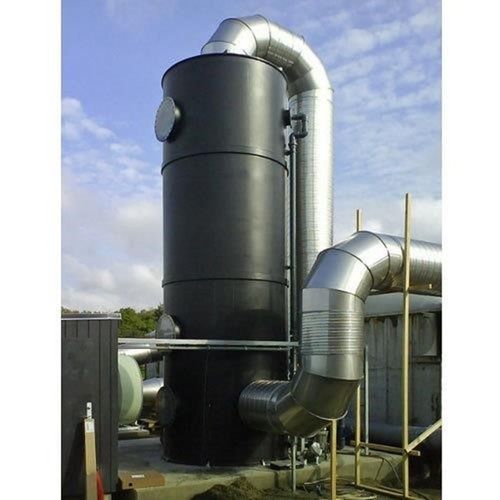
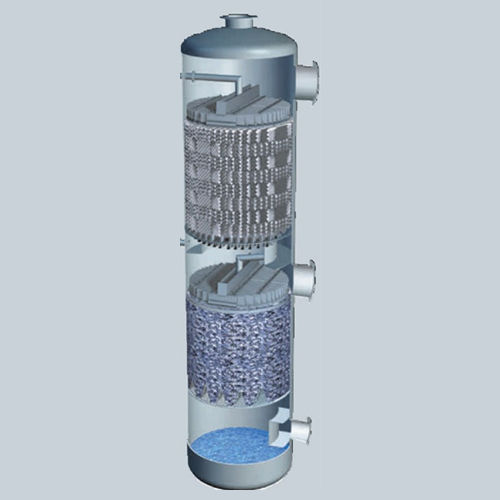
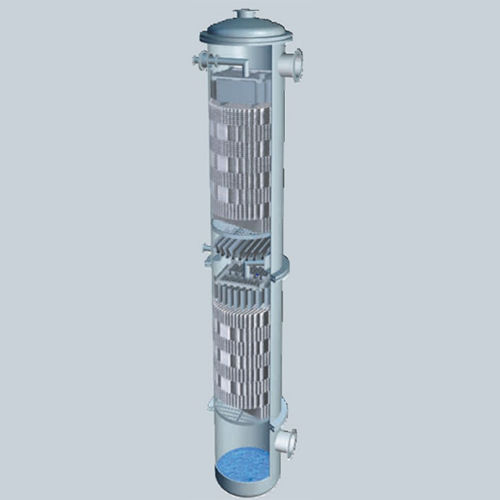
Gas absorption columns are units that you will use in the separation of gases by scrubbing and washing gas mixture. In this case, you will use a suitable liquid to help in scrubbing and washing impurities from the absorption column.
VEPL deals in all types of Dryer as per client requirement. All material of construction available in this equipment.
Optimized for Academic DemonstrationThis packed column system is specially engineered for academic environments, facilitating hands-on learning in chemical engineering labs. Its continuous operation mode and visibility through the glass column make it ideal for demonstrating mass transfer and gas absorption principles. Overload protection and sturdy assembly ensure both student and equipment safety during operation.
Superior Precision & Robust ConstructionFeaturing a reliable MS/SS frame with powder coating and equipped with digital meters, the system delivers high measurement accuracy (1%) and resistance to corrosion. Its design ensures longevity, ease of maintenance, and stable performance, even under regular educational use. The Raschig ring packing enhances mass transfer efficiency while the manual control panel allows for flexible, user-friendly operation.
FAQ's of Absorption In Packed Column:
Q: How does the Absorption In Packed Column system operate?
A: The system operates continuously, using a glass packed column filled with Raschig rings where a liquid (typically water) and a gas (air or CO2) flow counter-currently. The rates of gas and liquid flow can be precisely adjusted using rotameters, and digital meters display the measured values for accurate study of mass transfer and absorption processes.
Q: What is the primary benefit of using this equipment in a chemical engineering lab?
A: This equipment allows students and researchers to observe and analyze gas absorption and mass transfer phenomena firsthand, reinforcing theoretical concepts with practical experiments. The clear glass column and digital controls enhance understanding of process dynamics, making it an essential tool for chemical engineering education.
Q: When should the water and gas flow rates be adjusted during experiments?
A: Flow rates should be adjusted before and during experiments as required by the specific absorption study. Adjustments are typically made to investigate the effects of varying flow rates on absorption efficiency and mass transfer characteristics in a controlled and safe manner.
Q: Where can this packed column system be used?
A: Designed primarily for academic institutions and research centers across India, this equipment is ideal for chemical engineering laboratories focusing on gas absorption studies, process engineering education, and related experimental analyses.
Q: What safety features are integrated into the system's design?
A: The unit incorporates overload protection, a safe MS/SS structure with powder coating, and a stable assembly, ensuring safe operation in educational settings. The equipment also features low noise levels and requires standard water and power supply utilities.
Q: How is process accuracy maintained during experiments?
A: Process accuracy is maintained through the use of high-precision rotameters and digital meters, which offer measurement accuracy of 1%. The system also features a manual control panel for precise adjustments and continuous monitoring throughout the experiment.








 Send Inquiry
 Send Inquiry
 Send SMS